
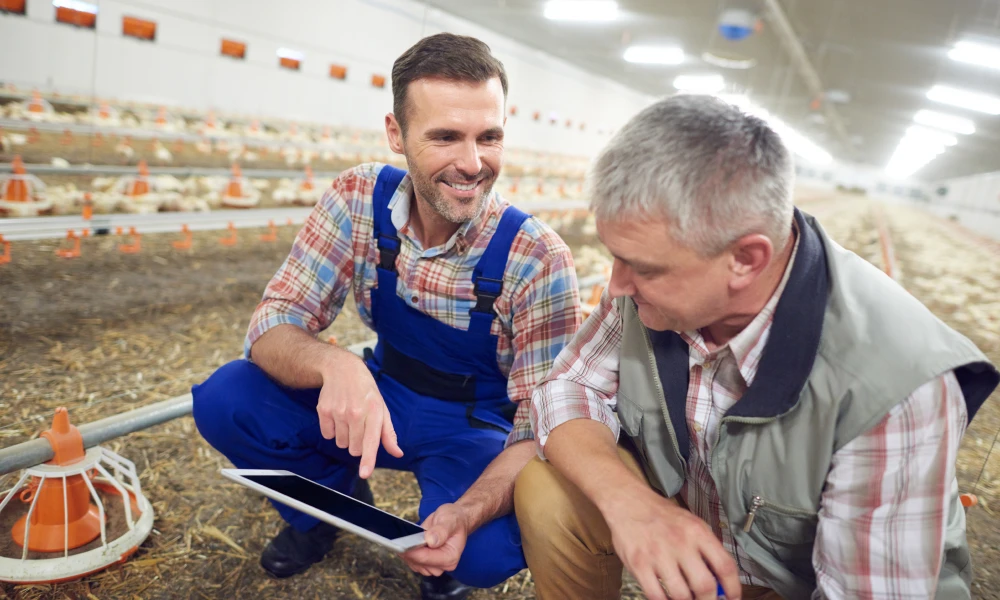
Poultry ERP (Enterprise Resource Planning) software is a specialized business management system designed to handle the unique operational, financial, and supply chain challenges of the poultry industry in India. Whether you run a broiler farm, layer farm, hatchery, or poultry processing unit, a dedicated poultry ERP software streamlines every department — from flock management and feed inventory to billing, GST compliance, and sales reporting.
India is one of the world’s largest poultry producers, with an industry worth over ₹1.5 lakh crore and growing at 8–10% annually. Yet most poultry businesses still rely on spreadsheets, manual registers, or disconnected accounting tools. This creates costly errors in feed consumption tracking, mortality recording, production planning, and financial reporting.
A purpose-built poultry ERP software in India solves these problems by integrating all operations on a single, cloud-based platform — giving owners real-time visibility and control.
What Are the Key Features of Poultry ERP Software in India?
1. Flock & Batch Management
Track each batch of birds from day-old chick placement to dispatch. Record daily mortality, body weight, feed consumption, and medication schedules. Get automatic alerts when mortality exceeds normal thresholds.
2. Feed Inventory & Consumption Tracking
Monitor raw material (maize, soya, premix) stock levels in real time. Compare standard feed conversion ratio (FCR) against actual FCR per batch. Trigger automatic purchase orders when stock falls below reorder levels.
3. Hatchery Management
Track egg setting, candling, hatching rates, and chick dispatch batch-wise. Manage setter and hatcher machine capacity. Integrate hatchery output with farm placement schedules.
4. Production Planning & Scheduling
Plan bird placement schedules, grow-out cycles, and processing dates. Coordinate with contract growers and integrators for better flock synchronization.
5. Sales & Distribution Management
Manage live bird sales, dressed chicken sales, and by-product distribution. Generate automated invoices, delivery challans, and route-based sales reports. Track receivables from retailers, wholesalers, and institutional buyers.
6. GST-Compliant Billing & Accounting
Generate GST invoices, e-way bills, and reconcile GSTR-1 and GSTR-3B automatically. Manage multi-location accounting for farms, processing plants, and depots in a single system. If you want to understand how an ERP differs from standalone accounting tools, read our detailed comparison: Difference Between ERP and Accounting Software.
7. HR & Payroll Management
Manage farm labour, supervisors, veterinarians, and processing unit staff. Automate attendance, overtime, and salary calculations.
8. Reporting & Analytics Dashboard
Access real-time dashboards showing flock performance, cost per kg of production, batch-wise profitability, and sales trends. Export reports for management review or bank/NABARD submissions.
Why Do Indian Poultry Businesses Need ERP Software Right Now?
Rising Input Costs Demand Precision
Feed accounts for 65–70% of poultry production costs. Even a 2% reduction in feed wastage through better tracking can save lakhs annually for mid-sized operations.
GST & Compliance Pressure
The GST Council’s tightening of e-invoicing mandates and e-way bill requirements makes manual compliance increasingly risky and time-consuming for poultry businesses.
Scale-Up Challenges
As integrators expand across multiple states, managing farm clusters, contract growers, and processing units on spreadsheets becomes unmanageable. ERP provides the backbone for scaled operations.
Competitive Market Dynamics
Modern poultry buyers — organized retail, QSR chains, and export markets — require traceability, consistent quality documentation, and on-time delivery. Only businesses with integrated software can reliably meet these demands.
For a broader perspective on how Indian SMEs are benefiting from ERP adoption, read: How to Choose ERP Software for Indian SME.
How Does Poultry ERP Software Compare to Generic ERP Systems?
| Feature | Generic ERP | Poultry-Specific ERP |
|---|---|---|
| Flock/batch tracking | ❌ Not available | ✅ Built-in |
| FCR calculation | ❌ Manual workaround | ✅ Automated |
| Mortality alerts | ❌ Not available | ✅ Real-time alerts |
| Hatchery management | ❌ Not available | ✅ Full module |
| Poultry-specific reports | ❌ Generic only | ✅ Industry reports |
| GST for poultry products | ⚠️ Partial | ✅ Full compliance |
Generic ERP systems like SAP or Oracle are built for manufacturing or retail. They lack the domain-specific modules that poultry operations need. Choosing a purpose-built or highly configurable Indian ERP — one that understands local regulatory requirements, Hindi/regional language support, and the economics of Indian poultry farming — is critical.
You can also explore how ERP systems handle broader supply chain challenges: ERP Software for Supply Chain Management in India.
Who Should Use Poultry ERP Software in India?
Broiler Integrators: Companies managing 50+ contract farms need centralized visibility into placement, feed dispatch, bird performance, and harvest planning.
Layer Farm Owners: Track daily egg production, grading, breakage, and dispatch to dealers and retailers.
Hatcheries: Manage egg sourcing from breeder farms, incubation cycles, and chick placement schedules.
Poultry Feed Manufacturers: Control raw material procurement, batch manufacturing, quality testing, and finished goods distribution. See how this connects with broader manufacturing ERP capabilities: Best ERP for Manufacturing in India.
Poultry Processing Plants: Track slaughter capacity, cut yields, cold chain management, and customer dispatch.
Small to Mid-Size Poultry Farmers: Even farms with 10,000–50,000 birds can benefit from affordable cloud ERP to track performance and finances.
What Should You Look for When Choosing Poultry ERP Software in India?
Is It Industry-Specific or Configurable?
Ensure the software has modules specifically for flock management, hatchery, and production tracking — not just generic inventory and accounting.
Does It Support Multi-Location Operations?
If you operate farms, a feed mill, and a processing plant in different locations, your ERP must handle inter-branch transfers, consolidated reporting, and location-based access control.
Is It GST-Ready and FSSAI-Compliant?
The software must generate correct tax invoices for poultry products, which have specific GST applicability rules, and support FSSAI traceability requirements.
Does the Vendor Provide Local Support?
ERP implementation support in Hindi, Gujarati, Telugu, or other regional languages, along with on-site training, significantly improves adoption rates. For insight into what makes Indian ERP companies reliable, see: Best ERP Software Development Companies in India.
What Is the Implementation Timeline?
A well-structured implementation plan is critical. Understand phase-wise rollout expectations. Read our guide: Step-by-Step Guide to Implement ERP in Small Business.
Can It Integrate with Weighing Machines & IoT Sensors?
Modern poultry ERP systems integrate with automatic weighing platforms, temperature sensors in sheds, and water consumption meters to capture real-time farm data.
How Does Poultry ERP Software Improve Profitability?
Direct Cost Savings:
- Reduces feed wastage by 2–4% through FCR monitoring → saves ₹5–12 per kg of meat
- Eliminates manual errors in billing and payment collection
- Reduces excess stock holding for feed and medicines
Indirect Gains:
- Faster decision-making through real-time dashboards
- Better contract grower management reduces under-performance losses
- Streamlined GST filing reduces CA/consultant fees
Inventory Optimization: See how better inventory tools drive savings: Best Inventory Management Software for Small Business in India.
Billing Automation: Reduce payment delays with automated invoicing: Automate Billing and Invoice for Small Business India.
 23 Sep, 2026