
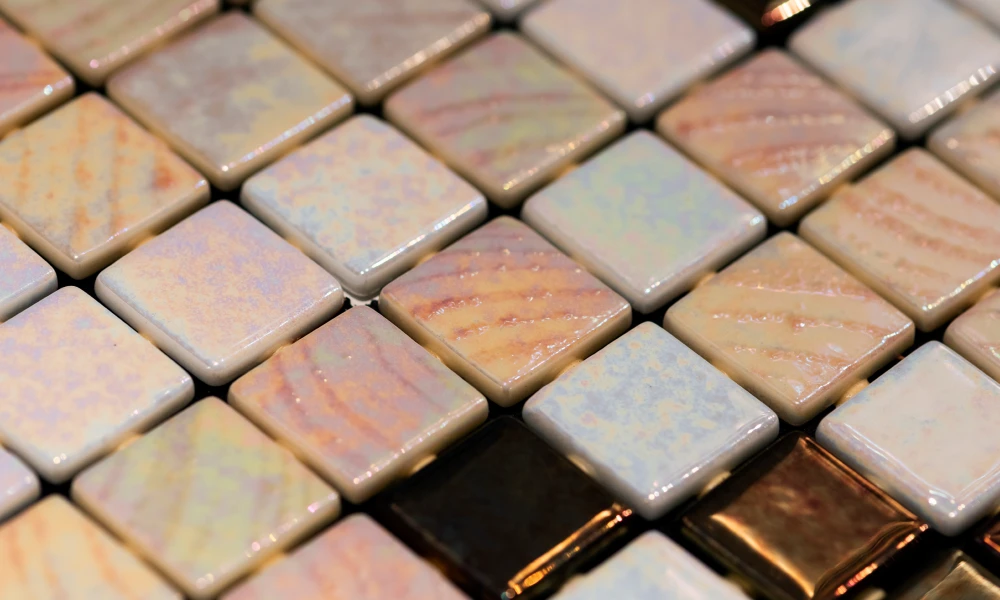
ERP software for ceramic and tiles manufacturing is a connected system that manages raw material batching (clay, feldspar, quartz, glazes), kiln production scheduling and firing batch tracking, size-design-finish SKU management, quality grading of finished tiles, box and pallet-based inventory, and GST-compliant billing replacing the manual combination of Excel SKU sheets, paper kiln logs, and Tally billing that most Indian ceramic manufacturers currently use.
For an Indian ceramic or tile manufacturer whether you produce wall tiles, floor tiles, vitrified tiles, sanitaryware, or ceramic glazes and frits ERP means: when a production batch enters the kiln, the system tracks raw material composition, firing schedule and temperature parameters, records output by size and design after firing, grades the finished tiles by quality (Grade 1, Grade 2, Grade 3), and generates GST-compliant billing per box or pallet on dispatch all from one connected platform.
The short answer: ceramic and tile manufacturing ERP connects your raw material batching to your kiln, your kiln output to your quality grading, and your finished goods to your dealer billing replacing the manual coordination that currently makes managing thousands of size-design SKU combinations a constant operational challenge.
Why Do Ceramic and Tile Manufacturers in India Struggle Without ERP?
Indian ceramic and tile manufacturers concentrated heavily in Morbi, Gujarat, which produces the majority of India’s ceramic tiles face a unique combination of operational challenges that standard manufacturing ERP and accounting software cannot adequately address.
Massive SKU explosion from size, design, and finish combinations. A single ceramic tile manufacturer may produce tiles in 10+ sizes, 50+ designs, multiple finishes (glossy, matte, textured), and different quality grades creating thousands of distinct SKU combinations. Managing inventory and billing across this complexity on Excel leads to constant stock misidentification and order fulfilment errors.
Kiln batch production and firing schedules are managed on paper. Ceramic production involves precise kiln firing schedules temperature profiles, firing duration, and batch sequencing that directly affect finished product quality. Paper-based kiln logs make it difficult to trace quality issues back to specific firing batches or optimise kiln utilisation.
Quality grading directly affects pricing and inventory value. After firing, tiles are graded Grade 1 (premium, no defects), Grade 2 (minor defects, lower price), and sometimes Grade 3 (seconds) with significant price differences between grades. Manual grading and inventory tracking by grade leads to pricing errors and grade-mixing that damages customer trust.
Box and pallet-based inventory does not fit standard unit tracking. Tiles are packed in boxes (covering a specific square footage) and palletised for dispatch inventory needs to be tracked simultaneously in pieces, boxes, square metres, and pallets. Standard accounting software inventory tracking cannot handle this multi-unit complexity.
Dealer network management across states is complex. Ceramic manufacturers sell through extensive dealer and distributor networks across India each with specific pricing, scheme discounts, and credit terms. Managing this outside the main ERP leads to pricing inconsistencies and outstanding receivable disputes.
GST on ceramic products and gas/fuel cost tracking. Ceramic tiles attract 18% GST, but manufacturers also need to track significant fuel costs (natural gas for kilns) against production a cost driver that manual systems rarely connect accurately to production output.
Difference Between ERP and Accounting Software
Best ERP for manufacturing in India
How Does ERP Solve the Specific Problems of Ceramic and Tile Manufacturers?
Can ERP Manage Thousands of Size-Design-Finish SKU Combinations?
Yes. Ceramic manufacturing ERP maintains a structured product master where each tile is defined by attributes size, design/pattern, finish (glossy, matte, textured), and quality grade allowing thousands of combinations to be tracked as distinct, searchable inventory items rather than requiring manual SKU code memorisation by staff.
Best inventory management software for small business India
Does ERP Track Kiln Batch Production and Firing Parameters?
Yes. Each kiln firing batch in the ERP records the raw material composition, firing temperature profile, and duration with output tracked by size and design after firing. This creates a permanent batch record that supports quality investigation when defects are traced back to specific firing conditions.
Manufacturing ERP 10 factory problems solved
Can ERP Track Quality Grading and Grade-Wise Inventory?
Yes. Finished tiles are graded post-firing (Grade 1, Grade 2, Grade 3) and tracked as separate inventory by grade with grade-specific pricing applied automatically at billing. This prevents grade-mixing and ensures customers receive and are billed for the correct quality tier.
Does ERP Handle Multi-Unit Inventory?
Yes. Ceramic ERP supports simultaneous tracking in multiple units pieces per box, square metres per box, and boxes per pallet with automatic conversion between units for both production planning and sales billing, matching how tiles are actually bought and sold in the market.
Can ERP Manage Dealer Pricing and Credit Across a National Network?
Yes. Dealer-specific price lists, scheme discounts, and credit limits are managed within the ERP giving sales teams live dealer account visibility before confirming new orders and preventing the pricing and credit disputes that arise from disconnected tracking.
How ERP improves customer relationship management
Does ERP Track Fuel and Utility Costs Against Production?
Yes. Natural gas and other utility costs are tracked against kiln production batches, giving manufacturers accurate production cost per square metre that accounts for this significant cost driver rather than treating fuel as a general overhead disconnected from actual output.
ERP software with GST billing for small manufacturers
What Features Should ERP for Ceramic and Tile Manufacturing Include?
1. Multi-Attribute Product Master for Size, Design, and Finish
Structured item master capturing size, design/pattern, finish, and quality grade as distinct attributes enabling thousands of SKU combinations to be managed without confusion.
2. Kiln Batch and Firing Schedule Management
Batch-wise firing records raw material composition, temperature profile, firing duration with output tracked by size and design after firing completion.
3. Quality Grading with Grade-Wise Inventory and Pricing
Post-firing quality grading (Grade 1/2/3) with separate inventory tracking and grade-specific automatic pricing at billing.
4. Multi-Unit Inventory Management
Simultaneous tracking in pieces, square metres, boxes, and pallets with automatic conversion for production planning and sales order processing.
Best inventory management software for small business India
5. Raw Material and Glaze Batch Tracking
Clay, feldspar, quartz, and glaze/frit inventory tracked by batch connected to production consumption for accurate material costing per firing batch.
6. Dealer and Distributor Network Management
Dealer-specific pricing, scheme management, credit limits, and outstanding tracking for national dealer networks with live account visibility before order confirmation.
7. Fuel and Utility Cost Allocation
Natural gas and utility cost tracking connected to kiln production batches giving accurate production cost per square metre inclusive of this major cost driver.
8. GST-Compliant Billing with Box/Pallet-Level Documentation
Correct HSN codes and 18% GST applied automatically with e-invoicing and e-way bill generation for eligible dispatches, and packing lists reflecting box and pallet quantities.
9. Export Documentation for Ceramic Exporters
For manufacturers exporting tiles, shipping document generation and export GST compliance (LUT/IGST refund) alongside domestic billing.
ERP for import export business India
10. Cloud-Based Dashboard for Production and Dealer Visibility
Live kiln production status, finished goods by grade and design, and dealer outstanding accessible from any device for owners managing production and sales simultaneously.
Why Indian SMEs are moving to cloud ERP in 2026
Ceramic Manufacturing ERP vs Standard Manufacturing ERP: Key Differences
| Requirement | Standard Manufacturing ERP | Ceramic & Tile Manufacturing ERP |
|---|---|---|
| SKU complexity | Standard product variants | Size × design × finish × grade combinations |
| Production tracking | Standard production order | Kiln batch with firing parameters |
| Quality classification | Pass/fail | Multi-tier grading (Grade 1/2/3) with pricing impact |
| Unit of measurement | Single unit typically | Pieces + boxes + sq. metres + pallets simultaneously |
| Major cost driver tracking | Standard overhead | Fuel/gas cost per firing batch |
| Dealer network scale | Regional | National, multi-tier pricing |
Why Morbi Is the World’s Ceramic Tile Manufacturing Capital
Morbi, located just 60 kilometres from Rajkot in Gujarat, produces over 70% of India’s ceramic tiles and is recognised as the world’s second-largest ceramic tile manufacturing cluster after China. The region is home to hundreds of ceramic manufacturers producing wall tiles, floor tiles, vitrified tiles, and sanitaryware for both the massive domestic market and significant export volumes.
Despite this global manufacturing scale, most Morbi ceramic manufacturers still manage production, SKU inventory, and dealer billing through manual systems paper kiln logs, Excel SKU sheets, and Tally billing while their dealer networks and export customers increasingly expect digital documentation, GST e-invoicing compliance, and accurate grade-wise inventory management.
The ceramic manufacturers who adopt ERP first gain a measurable operational advantage accurate SKU-level inventory across thousands of combinations, better kiln utilisation, and dealer account management that reduces pricing disputes and improves cash flow.
Best ERP for small businesses in Rajkot
ERP for MSME in India Udyam manufacturer guide
Which Types of Ceramic and Tile Businesses Benefit Most from ERP?
Wall and floor tile manufacturers : massive SKU management across size-design-finish combinations, kiln batch tracking, and national dealer network billing.
Vitrified tile manufacturers : larger-format tile production with precise firing parameter tracking and premium quality grading requirements.
Sanitaryware manufacturers : casting and firing batch tracking for basins, WCs, and bathroom fittings, with quality inspection and dealer distribution management.
Ceramic glaze and frit manufacturers : raw material batch composition tracking, quality testing per batch, and B2B billing to tile manufacturer customers.
Ceramic tile exporters : combining domestic dealer network management with export documentation, LUT/IGST compliance, and international quality certification.
ERP for import export business India
Ceramic tile traders and distributors : multi-brand tile inventory management, showroom and godown stock tracking, and contractor/retail billing.
Best ERP for trading business in India
How Much Time Does ERP Save for an Indian Ceramic Manufacturer?
| Task | Without ERP | With Ceramic Manufacturing ERP |
|---|---|---|
| SKU identification for order processing | 15–20 min manual catalogue search | Under 2 minutes |
| Kiln batch record and firing log | Manual paper log | Digital, real-time |
| Quality grading and inventory update | Manual, error-prone | Systematic, grade-linked |
| Dealer outstanding check before order | Phone call, 10–15 min | Instant live dashboard |
| Fuel cost allocation to production | Rarely calculated accurately | Automatic per batch |
| Monthly GST filing across large SKU base | 3–5 days | Under 2 hours |
| E-way bill per inter-state dispatch | 15–20 min manual portal | Automatic on dispatch |
For a ceramic manufacturer producing 50,000+ square metres monthly across multiple SKUs, this saves approximately 35–50 hours monthly in production documentation, inventory management, and billing work.
See real ERP ROI for Indian SMEs
Why Apna ERP Is the Right Choice for Indian Ceramic and Tile Manufacturers
Apna ERP is a cloud-based ERP built for Indian manufacturing SMEs including ceramic and tile manufacturers with the massive SKU complexity, kiln batch tracking, and quality grading requirements that generic accounting software cannot handle.
Multi-attribute SKU management. Size, design, finish, and grade tracked as distinct attributes managing thousands of combinations without the confusion that manual Excel sheets create.
Kiln batch production tracking. Firing parameters and output recorded per batch supporting quality investigation and better kiln utilisation planning.
Grade-wise inventory and pricing. Grade 1, Grade 2, and Grade 3 tiles tracked separately with automatic grade-specific pricing eliminating grade-mixing errors.
Multi-unit inventory built in. Pieces, boxes, square metres, and pallets tracked simultaneously matching how tiles are actually bought, produced, and sold.
India-first GST compliance. Correct HSN codes and 18% GST applied automatically with e-invoicing and e-way bill automation for national dealer dispatch.
Proximity to Morbi. Apna ERP’s team is based in Rajkot just 60 kilometres from Morbi’s ceramic manufacturing cluster understanding the operational realities of Gujarat’s ceramic industry directly.
How to Implement ERP in Your Ceramic or Tile Manufacturing Business
Step 1: Build Your Multi-Attribute Product Master
Enter all products with their size, design, finish, and grade attributes for large catalogues, this can be imported from existing Excel SKU lists or Tally item masters.
Step 2: Configure Units of Measurement and Conversions
Set up pieces, boxes, square metres, and pallets as tracked units with conversion factors specific to each tile size (pieces per box, sq. metres per box, boxes per pallet).
Step 3: Set Up Kiln Batch and Firing Parameters
Configure batch tracking fields for raw material composition, firing temperature, and duration appropriate to your specific kiln and production process.
Step 4: Set Up Dealer Masters with Pricing and Credit
Enter all dealers and distributors with contracted price lists, scheme discounts, and credit limits so billing applies correct pricing automatically per dealer.
Step 5: Go Live with Current Stock as Opening Inventory
Enter current finished goods stock by size, design, and grade as opening inventory before processing new production and sales transactions through the ERP.
Full step-by-step ERP implementation guide
Frequently Asked Questions
What is ERP software for ceramic and tiles manufacturing in India?
It is a connected system managing multi-attribute SKU tracking (size, design, finish, grade), kiln batch production with firing parameters, quality grading with grade-wise inventory and pricing, multi-unit stock management (pieces, boxes, square metres, pallets), and GST billing replacing the manual Excel SKU sheets, paper kiln logs, and Tally billing used by most Indian ceramic manufacturers.
Can ERP manage the massive number of SKU combinations in tile manufacturing?
Yes. Ceramic manufacturing ERP uses a structured product master with size, design, finish, and quality grade as distinct attributes allowing thousands of combinations to be tracked as searchable, distinct inventory items rather than requiring manual memorisation of item codes.
How does ERP track kiln batch production and firing schedules?
Each kiln firing batch is recorded in the ERP with raw material composition, temperature profile, and firing duration with finished tile output tracked by size and design after firing. This creates a permanent digital record supporting quality investigation and kiln utilisation optimisation.
Can ERP handle quality grading for tiles Grade 1, Grade 2, Grade 3?
Yes. Post-firing quality grading is tracked as separate inventory by grade, with grade-specific pricing applied automatically at billing preventing the grade-mixing errors and pricing disputes that occur with manual grading processes.
Does ERP track inventory in the multiple units tiles are sold in pieces, boxes, square metres?
Yes. Ceramic ERP supports simultaneous multi-unit tracking with automatic conversion matching how tiles are produced (pieces), packed (boxes), sold (square metres), and shipped (pallets).
Is ERP affordable for a small ceramic manufacturer in Morbi or Gujarat?
Yes. Cloud-based ERP for ceramic manufacturers is priced on a monthly subscription with no server hardware cost. See ERP pricing for Indian MSMEs
Does ERP track fuel and gas costs against ceramic production?
Yes. Natural gas and utility costs are tracked against kiln production batches, giving manufacturers accurate production cost per square metre that reflects this major cost driver rather than treating fuel as an unallocated general overhead.
Which ERP is best for ceramic and tile manufacturers in Morbi in 2026?
The best ERP for Morbi ceramic manufacturers combines multi-attribute SKU management, kiln batch tracking, grade-wise inventory, and multi-unit stock handling with support from a team based nearby in Gujarat who understand ceramic industry operations. Apna ERP, based in Rajkot just 60km from Morbi, is built for exactly this. Compare ERP companies
 15 Oct, 2026