
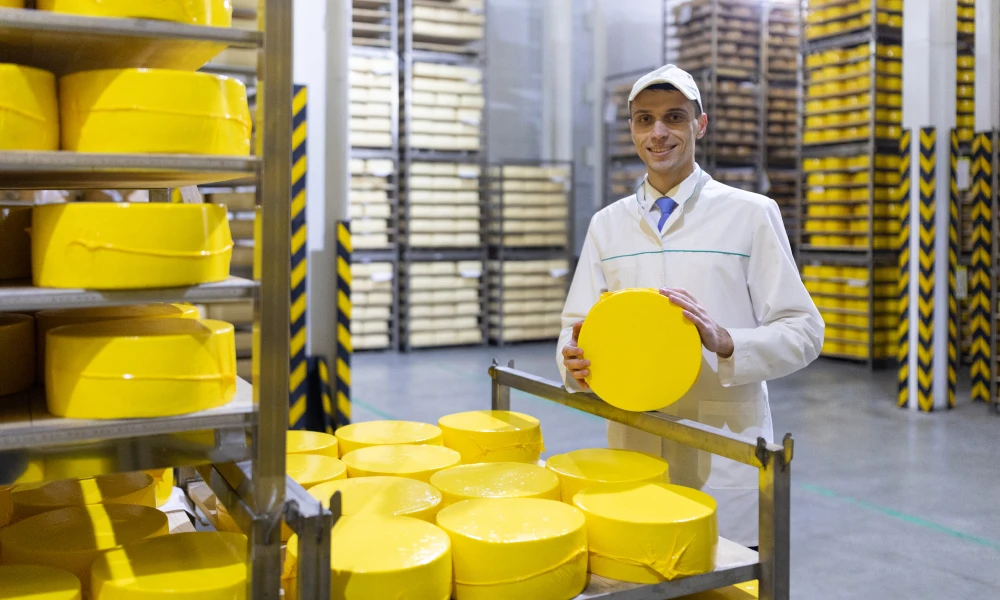
ERP software for dairy and food processing is a connected system that manages raw material procurement, batch-wise production tracking, expiry date management, FSSAI compliance documentation, cold chain inventory, and GST-compliant billing replacing the manual combination of paper batch records, Excel expiry trackers, and Tally billing that most Indian food processors currently use.
For an Indian dairy or food processing business whether you produce milk, paneer, ghee, butter, flavoured dairy drinks, packaged snacks, pickles, or processed fruits and vegetables ERP means: when a production batch is completed, the system records raw material consumption, assigns a batch number and manufacturing/expiry date, updates finished goods inventory, generates FSSAI-compliant records, and creates a GST invoice on dispatch all from one connected platform.
The short answer: dairy and food processing ERP connects your production floor to your compliance records and billing replacing the fragmented manual systems that create food safety risk and operational inefficiency every day.
Why Do Dairy and Food Processing Businesses in India Struggle Without ERP?
Indian dairy and food processing businesses face unique operational and compliance challenges that standard billing software and Tally cannot handle. Batch traceability, expiry management, cold chain inventory, and multi-rate food GST create complexity that grows with every product added and every distribution channel expanded.
No batch-wise production traceability. When a product quality complaint or FSSAI recall notice arrives, the ability to trace exactly which batch was affected what raw materials went into it, when it was produced, where it was dispatched can determine whether you recall 100 units or 10,000. Without ERP, this trace takes days and is often incomplete.
Expiry date management is manual and risky. Most Indian food processors track product expiry on Excel or paper with near-expiry alerts sent manually by a stores person who may miss products buried in the back of a cold room. Selling expired products even accidentally attracts FSSAI action and customer trust damage.
Cold chain inventory is untracked. Dairy businesses with refrigerated storage and temperature-sensitive products cannot rely on room-temperature inventory management. Without ERP tracking cold room stock separately from ambient stock, FIFO (First In, First Out) discipline breaks down and near-expiry products accumulate undetected.
Multi-rate GST for food products creates billing errors. Food products in India attract widely varying GST rates: 0% for unpackaged staples, 5% for packaged dairy and basic foods, 12% for some processed foods, and 18% for premium packaged items. Manual GST rate selection during billing leads to frequent mismatches costly for businesses with large SKU counts.
FSSAI compliance documentation is manual. FSSAI requires food businesses to maintain batch manufacturing records, raw material test certificates, and distribution records. Compiling these manually for audits and licence renewals is time-consuming and creates compliance risk when records are incomplete.
No demand-driven production planning. Without visibility into sales velocity by product and SKU, production managers estimate batch quantities based on gut feel leading to both over-production (expiry waste) and under-production (stockouts on fast-moving products).
Difference Between ERP and Accounting Software
Best ERP for food manufacturing companies in India
How Does ERP Solve the Specific Problems of Dairy and Food Processing?
Can ERP Track Batch-Wise Production with Manufacturing and Expiry Dates?
Yes. Every production batch in a food processing ERP is assigned a unique batch number with manufacturing date, best before date, and shelf life calculated automatically. This batch number travels with the product through finished goods inventory, dispatch, and customer delivery providing complete traceability from raw material to consumer.
Does ERP Manage FIFO for Perishable Products Automatically?
Yes. Food processing ERP enforces First In, First Out (FIFO) dispatch discipline automatically selecting the earliest-manufactured batch for dispatch to ensure oldest stock moves first. Near-expiry alerts trigger when product age reaches a defined threshold, prompting the sales team to prioritise that stock.
Best inventory management software for small business India
Can ERP Support FSSAI Compliance Documentation?
Yes. ERP maintains batch manufacturing records raw material details, quantities, supplier batch numbers, process parameters in a format that supports FSSAI audit requirements. Recall simulation tools let food businesses trace every unit of a specific batch and identify all customers who received it within minutes, not days.
Does ERP Handle Multi-Rate GST for Food Products Correctly?
Yes. Each product in the ERP item master carries its HSN code and correct GST rate applied automatically on every invoice. For a dairy business selling milk (0% GST), packaged paneer (5% GST), and flavoured dairy drinks (12% GST) in the same delivery, ERP applies correct rates per line item automatically eliminating the manual rate selection that leads to GSTN mismatches.
ERP software with GST billing for small manufacturers
Can ERP Manage Cold Chain and Temperature-Sensitive Inventory?
Yes. ERP supports separate inventory locations for cold rooms, deep freezers, and ambient storage with stock tracked by location and temperature zone. FIFO rules apply per storage type, ensuring cold chain products are dispatched in correct sequence without manual counting.
Does ERP Connect Sales Data to Production Planning?
Yes. Sales velocity data which products are moving fastest, by which customer, in which region feeds production planning in the ERP. Production managers can plan batch sizes based on actual demand patterns rather than estimates, reducing both over-production waste and stockout incidents.
What Features Should ERP Software for Dairy and Food Processing Include?
1. Batch Production with Manufacturing and Expiry Date Assignment
Unique batch numbers for every production run with automatic manufacturing date, best before date, and shelf life calculation linked to raw material batches for complete forward and backward traceability.
2. FIFO Inventory Management with Near-Expiry Alerts
Automatic FIFO dispatch selection with configurable near-expiry alert thresholds that notify stores and sales teams when products are approaching their best before date.
3. Raw Material Quality and Supplier Batch Tracking
Supplier lot numbers, quality test results (fat content, SNF, microbial counts for dairy), and certificate of analysis linked to each raw material receipt traceable back from any finished product batch.
4. FSSAI Compliance Documentation
Batch manufacturing records, raw material supplier details, and distribution records maintained in FSSAI-audit-ready format with recall simulation that traces affected batches in minutes.
5. Multi-Rate Food GST Billing
HSN codes and correct GST rates (0%, 5%, 12%, 18%) pre-configured per product applied automatically on every invoice, eliminating manual rate selection for food businesses with complex product portfolios.
Automate billing and invoicing for small business India
6. Cold Chain and Multi-Location Inventory
Separate inventory tracking for cold rooms, freezers, and ambient storage with location-wise stock levels, FIFO enforcement per location, and temperature zone management.
7. Route and Distributor Management
For dairy businesses with daily milk delivery routes or distributor networks route-wise delivery planning, distributor-wise stock allocation, and collection management (returnable containers, crates, bottles).
8. Production Planning Based on Sales Demand
Demand-driven batch size planning using sales history and current order data to plan production quantities per SKU, reducing waste from over-production and preventing stockouts on high-demand products.
9. Quality Control and Rejection Tracking
Quality hold, rejection, and rework tracking per batch with automatic inventory adjustment and cost allocation for rejected production.
10. Cloud-Based Access for Owners and Multiple Locations
Live production, inventory, and sales data accessible from any device essential for dairy businesses with separate farm/processing facility, cold storage, and distribution locations.
Why Indian SMEs are moving to cloud ERP in 2026
Which Types of Dairy and Food Processing Businesses Benefit Most from ERP?
Dairy processors (milk, paneer, ghee, butter, curd, flavoured drinks) : batch traceability, cold chain management, FIFO dispatch, distributor billing, and returnable container tracking are all critical and all managed in one ERP.
Packaged food manufacturers (snacks, namkeen, spices, pickles) : batch number tracking, expiry date management, multi-rate GST billing, and distributor network management across regional markets.
Fruit and vegetable processing units (juices, purees, frozen produce) : seasonal raw material procurement planning, batch production with yield tracking, cold storage management, and export documentation for processed agricultural products.
Bakery and confectionery manufacturers : recipe-based BOM, daily production planning, short shelf-life inventory management, and retail/wholesale billing with correct GST treatment.
Beverage producers (water, juices, soft drinks) : line-wise production tracking, bottle and packaging material consumption, batch QC records, and multi-SKU billing across retail and institutional channels.
Poultry and meat processors : live animal to processed product traceability, cold chain inventory, weight-based billing, and FSSAI compliance documentation.
ERP for poultry business in India
How Much Time Does ERP Save for an Indian Dairy or Food Processing Business?
| Task | Without ERP | With Food Processing ERP |
|---|---|---|
| Batch record creation per production run | 30–60 min (manual paper/Excel) | Under 10 minutes |
| Near-expiry stock identification | Manual weekly physical check | Automatic daily alerts |
| FSSAI audit record compilation | 2–5 days before each audit | Instant, always ready |
| GST billing across multi-rate products | Manual rate selection, error-prone | Automatic per product |
| Recall trace for specific batch | Days of manual cross-checking | Minutes, full trace |
| Monthly production cost report | 2–3 days manual compilation | Real-time dashboard |
| Distributor outstanding reconciliation | Monthly manual statement | Live, per distributor |
For a dairy or food processing business producing 10–50 batches per month, this saves approximately 25–35 hours monthly in production documentation, compliance, and billing work.
See real ERP ROI calculations for Indian SMEs
Why Apna ERP Is the Right Choice for Indian Dairy and Food Processing Businesses
Apna ERP is a cloud-based ERP built for Indian manufacturing and processing SMEs including dairy and food businesses with the batch traceability, expiry management, and food-specific GST compliance requirements that generic accounting software cannot handle.
Batch tracking with expiry dates built in. Every production batch tracked with manufacturing date, best before date, and full forward-backward traceability without separate food safety software.
FIFO enforcement and near-expiry alerts. Automatic oldest-stock-first dispatch selection and configurable expiry alerts protecting food safety and reducing waste simultaneously.
India-first multi-rate food GST. Correct HSN codes and 0%/5%/12%/18% GST rates applied automatically per product eliminating the billing errors that create GSTN mismatches for food businesses.
FSSAI compliance documentation. Batch manufacturing records and distribution traceability maintained in audit-ready format reducing the compliance preparation burden for every FSSAI inspection.
Affordable cloud subscription. No server hardware, no expensive food industry-specific ERP licence predictable monthly cost designed for Indian food processing MSMEs.
Local Rajkot support team. Based in Rajkot, Gujarat with support in Hindi and Gujarati and a team that understands Indian food processing operations, dairy supply chains, and FSSAI compliance.
See why Apna ERP is the best ERP for small businesses in Rajkot Compare top ERP companies in India 2026
Real ERP pricing for Indian MSMEs
ERP for MSME in India Udyam food business guide
How to choose the right ERP for your Indian SME
How to Implement ERP in Your Dairy or Food Processing Business
Step 1: Map Your Production and Quality Workflow
Document how raw materials are received and quality-checked, how production batches are planned and executed, how finished goods are stored and dispatched identifying every manual record currently maintained on paper or Excel.
Step 2: Configure Product Masters with Shelf Life and GST
Set up all finished products with shelf life parameters, HSN codes, and correct GST rates and all raw materials with supplier batch tracking fields and quality parameters relevant to your product category.
Step 3: Set Up Storage Locations and FIFO Rules
Configure cold rooms, freezers, and ambient stores as separate inventory locations with FIFO rules and near-expiry alert thresholds set per product category.
Step 4: Train Production, Quality, and Sales Teams
Production staff need training on batch entry and quality recording. Stores staff need training on FIFO dispatch and expiry monitoring. Sales staff need training on multi-rate GST billing and distributor management.
Step 5: Go Live at the Start of a New Batch Cycle
Begin ERP tracking from the start of a new production cycle entering current finished goods as opening stock with their batch numbers and expiry dates before processing any new transactions.
Full step-by-step ERP implementation guide
Frequently Asked Questions
What is ERP software for dairy and food processing business in India?
It is a connected system managing batch-wise production tracking with expiry dates, FIFO inventory dispatch, FSSAI compliance documentation, multi-rate food GST billing, and distributor management replacing the manual batch records, Excel expiry trackers, and Tally billing used by most Indian dairy and food processing businesses.
Can ERP track batch numbers and expiry dates for dairy products automatically?
Yes. Every production batch is assigned a unique batch number with manufacturing date and best before date tracked through finished goods inventory, dispatch, and customer delivery, providing complete product traceability in both directions.
How does ERP help with FSSAI compliance for food businesses?
ERP maintains batch manufacturing records, raw material supplier details, and distribution records in FSSAI-audit-ready format. Recall simulation tools trace every unit of a specific batch to its recipients within minutes significantly reducing audit preparation time and compliance risk.
Does ERP handle the different GST rates for food products in India?
Yes. Each food product carries its HSN code and correct GST rate in the ERP 0% for unpackaged staples, 5% for packaged dairy basics, 12% for processed foods, and 18% for premium packaged items applied automatically on every invoice without manual rate selection.
Can ERP manage cold chain inventory for temperature-sensitive dairy products?
Yes. Separate inventory locations for cold rooms, freezers, and ambient storage with FIFO enforcement per location and near-expiry alerts ensure temperature-sensitive products are tracked and dispatched correctly without manual cold storage counts.
Is ERP affordable for a small dairy or food processing unit in India?
Yes. Cloud-based ERP for food processing is priced on a monthly subscription with no server hardware cost. See ERP pricing for Indian MSMEs
What is the difference between food processing ERP and general manufacturing ERP?
Food processing ERP specifically includes batch traceability with expiry dates, FIFO enforcement, FSSAI compliance documentation, cold chain inventory, and multi-rate food GST billing features that general manufacturing ERP typically does not include or handles inadequately for food industry requirements.
Which ERP is best for dairy businesses and food processors in India in 2026?
The best ERP for Indian dairy and food processing businesses combines batch tracking with expiry management, FSSAI compliance documentation, multi-rate food GST billing, and affordable cloud pricing. Apna ERP is built for Indian food processing SMEs with these exact requirements. Compare top ERP companies in India →
 15 Oct, 2026